Roofing Insurance Claims Support in Downey, CA
SMH Roof Works helps Downey, CA (90239-90242) homeowners document and navigate roofing insurance claims after storm, wind, or hail damage. Licensed and bonded, we provide thorough damage inspections, written repair scopes, and adjuster walkthrough support. We help homeowners handle roofing insurance claims Downey CA insurers process every storm season, from first inspection to final payout.
100+ ReviewS
Licensed & Certified
100% Satisfied clients
A poorly documented insurance claim can cost you real money.
Insurance adjusters inspect dozens of roofs and work from company guidelines that can undercount real damage. Without a thorough, well-documented inspection alongside your claim, it’s easy for hail hits, wind-lifted shingles, or hidden flashing damage to go unrecorded and unpaid for.
We help Downey homeowners document their roof damage claim right the first time.
We’re licensed and bonded to work in California, and every damage report and repair scope is written, not verbal. Every inspection includes the attic, not just what’s visible from the ground, and we’re available to walk the roof alongside your adjuster whenever schedules allow.
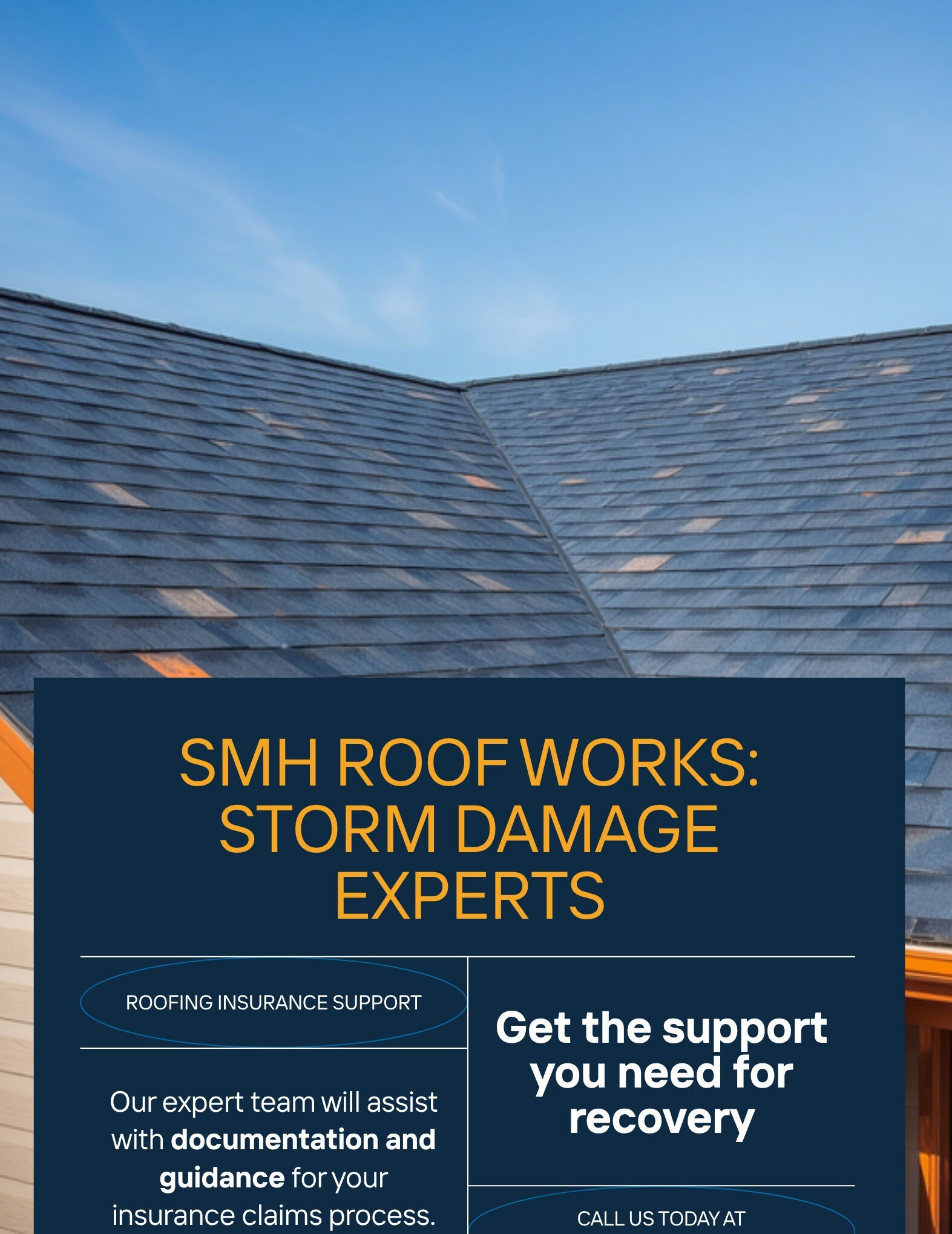
When wind, hail, or a falling branch damages your roof, filing an insurance claim is often the fastest way to get repairs covered, but the claims process can be confusing if you’ve never been through it. In Southeast LA County, most wind-driven roof damage happens during Santa Ana wind season, which typically runs from fall through winter, so claims tend to cluster in those months. SMH Roof Works helps Downey, CA homeowners document roof damage thoroughly, understand what an insurance adjuster is looking for, and put together the kind of detailed inspection report and repair scope that supports a fair review of your claim. We work alongside you and your insurance company throughout the process, from the first inspection through the final repair.
This is a documentation and inspection support service, not a legal or public adjusting service. We are a licensed roofing contractor, and our role is to help you see and record what’s actually wrong with your roof so nothing gets missed or underestimated, not to negotiate your settlement or represent you before your insurer.
What To Do Right After Roof Damage Occurs
The steps you take in the first day or two after a storm can make a real difference in how smoothly your claim moves. A few things are worth doing before you even call your insurer:
- Address any active leaks with a tarp or temporary cover to prevent interior water damage, since most policies expect reasonable steps to prevent further loss
- Take photos and video of visible damage from the ground and, if it’s safe, from a ladder. Do not walk on a damaged roof yourself
- Note the date and cause of the damage (wind event, hailstorm, fallen tree limb) as best you can
- Keep receipts for any emergency tarping or temporary repairs, as these are often reimbursable under most policies
- Contact your insurance company to open a claim and get a claim number, and ask when an adjuster will be scheduled. Under California’s fair claims settlement regulations, insurers are generally required to acknowledge a new claim within 15 days and to accept or deny it within 40 days of that notice, so if you go well past those windows without a response, it’s worth following up in writing
- Call a licensed roofing contractor to schedule a damage inspection before or around the same time as the adjuster’s visit
Avoid making permanent repairs before the damage has been documented and, ideally, seen by the adjuster, as doing so can make it harder to establish the extent of the original loss.
Our Roof Damage Documentation Process
A thorough contractor inspection is the foundation of a well-supported claim. When we inspect a roof for insurance purposes, we’re not just confirming there’s damage: we’re building a record that clearly connects what we found to the event that caused it. Our documentation typically includes:
- Full roof walk and photo survey. We inspect every slope, not just the areas visible from the street, and photograph damage such as hail bruising on shingles, creased or lifted shingle tabs, damaged flashing, dented vents and gutters, and any related damage to skylights or roof-mounted equipment.
- Chalk-testing and marking. For hail claims especially, we may mark individual hits on test squares of roofing so the pattern and density of impacts is clearly visible in photos, which helps distinguish storm damage from ordinary wear.
- Written damage summary. We put together a written report describing what we observed, where, and how it’s consistent with the reported storm date, in plain language an adjuster or claims examiner can follow.
- Attic and interior check. Where accessible, we check the attic for water staining, active leaks, or daylight coming through decking, since interior evidence often supports an exterior damage finding.
- Repair scope and estimate. We prepare a detailed, itemized scope of the repair or replacement work needed, broken down by trade and material, which becomes the basis for comparing against the insurance company’s own estimate.
This documentation is yours to keep and share with your insurance company, whether or not you ultimately have us complete the repair work.
Understanding ACV vs. RCV on Your Claim
Most homeowners insurance policies pay roof claims one of two ways, and knowing which applies to your policy helps set expectations for how the payment will be structured:
| Term | What It Means |
|---|---|
| Actual Cash Value (ACV) | Replacement cost minus depreciation for the roof’s age and condition. The initial payout is lower, reflecting wear the roof already had before the storm. |
| Replacement Cost Value (RCV) | The full cost to replace the damaged roof with new materials of similar kind and quality, with no deduction for age or wear. |
| Recoverable Depreciation | On many RCV policies, the insurer withholds the depreciated amount until repairs are completed, then releases the remainder once you submit proof the work was done. |
If your policy includes recoverable depreciation, keeping your final invoice and any completion documentation from your contractor is important, since that paperwork is usually what your insurer needs to release the second, depreciation portion of the payment. We can provide that documentation once repair work is complete.
Your deductible also affects what you’ll pay out of pocket, and many California homeowners policies apply a separate, often percentage-based deductible for wind and hail events rather than the flat dollar amount used for other claims. That separate deductible is usually higher than a standard one, so it’s worth checking your declarations page or asking your agent what applies before assuming a claim will be worthwhile to file.
Meeting the Insurance Adjuster
The adjuster’s inspection is often the single most important step in the claim, since their report typically drives what the insurance company approves for payment. We recommend having your contractor present during that visit whenever your schedule and the adjuster’s allow it. A contractor who has already inspected the roof can walk the property alongside the adjuster, point out damage that might otherwise be overlooked from the ground or from a quick pass across the roof, and make sure the adjuster’s measurements and notes reflect the full scope of what’s actually wrong.
Adjusters inspect many roofs and are working from their own company’s guidelines, which can sometimes lead to conservative estimates, for example, counting only clearly visible hail hits, or approving a spot repair where a full slope replacement may actually be warranted for a uniform, code-compliant result. Having a second, contractor-level set of eyes on-site doesn’t guarantee a different outcome, but it does help ensure the adjuster is working from complete information.
If you can’t coordinate schedules so we’re there in person, we can still provide our written report and photos to you or directly to your adjuster or insurance company ahead of the visit.
Repair Scopes, Estimates, and Supplement Requests
Once the adjuster issues their estimate, it’s common for our contractor’s scope of work to identify additional damage or necessary work that wasn’t included, such as a section of decking that needs replacing once old shingles are removed, code-required upgrades like drip edge or ice-and-water shield that current building codes call for but the original roof didn’t have, or damage that only becomes visible once tear-off begins. When that happens, we prepare a supplement request: a written, itemized addition to the original estimate, supported by photos and documentation, submitted to the insurance company for review.
Supplement requests are a normal, expected part of many roofing claims rather than a sign that anything went wrong with the original estimate: hidden damage under old roofing material is common and often can’t be fully assessed until the roof is opened up. We handle the documentation and paperwork side of supplements as part of the repair process for jobs we complete.
Common Reasons Roof Claims Get Denied or Reduced
Understanding why claims sometimes come back denied or lower than expected can help you avoid preventable issues:
- Damage attributed to wear and tear rather than a specific storm event, which is why documenting the roof’s condition and the storm date matters
- Missed policy deadlines for reporting a claim or submitting documentation, which vary by insurer and by the specific policy, so it’s worth confirming your reporting window as soon as damage occurs
- Insufficient documentation at the time of the adjuster’s visit, especially if repairs were made before damage was recorded
- Pre-existing damage or deferred maintenance that the insurer determines existed before the claimed event
- Coverage limitations or exclusions specific to your policy, such as separate wind/hail deductibles or age-based roof coverage limits
If your claim is denied or you disagree with the insurer’s estimate, our documentation and repair scope can serve as supporting evidence when you ask your insurance company to reconsider. For disputes that go beyond documentation, such as coverage disagreements, lowball settlement offers, or situations where you believe the claim is being handled in bad faith, a licensed public adjuster or an attorney who specializes in insurance claims is the appropriate resource, since negotiating coverage and settlement amounts on a policyholder’s behalf is outside the scope of what a roofing contractor is licensed to do.
Timelines vary by insurer and by how complex the damage is, but a rough pattern is common: the adjuster inspection typically happens within a couple of weeks of filing, a decision follows within the state’s required windows noted above, and once a claim is approved, scheduling and completing the actual roof replacement usually takes another one to a few weeks depending on contractor availability and material lead times. Claims involving supplements, disputed scope, or widespread storm damage across a neighborhood tend to run longer, since adjusters and contractors alike are managing a higher volume of inspections at once.
What We Do and What We Don’t
To be clear about the scope of this service:
- We inspect your roof and document damage with photos, notes, and measurements
- We prepare a detailed, written repair scope and estimate for the work needed
- We’re available to meet the adjuster on-site and answer roofing-specific questions during their inspection
- We prepare supplement requests when additional damage is found during the repair process
- We do not negotiate your insurance settlement, represent you in a coverage dispute, or act as a public adjuster or attorney
- We do not guarantee a specific claim outcome, approval, or payout amount: that determination is made by your insurance company
If your situation calls for formal claims advocacy or legal representation, we’re glad to point you toward the licensed public adjusters and attorneys who handle that work, and we’ll continue supporting the roofing side of your claim alongside them.
Serving Downey and the Gateway Cities
SMH Roof Works provides roof damage inspection and insurance claim documentation support for homeowners throughout Downey, CA (ZIP codes 90239-90242) and the surrounding Gateway Cities, including Bellflower, Paramount, South Gate, Norwalk, Whittier, Bell Gardens, and Pico Rivera, as well as Pasadena as part of our extended San Gabriel Valley service area. As a licensed and bonded California roofing contractor, we’re available to inspect storm, wind, and hail damage and help you put together the documentation your insurance claim needs, whether that’s ahead of the adjuster’s visit, in response to a denied or reduced estimate, or as part of a full repair or replacement project.